Federal Bureau of Investigation
Slow BurnThe Federal Bureau of Investigation (FBI) is a central federal participant in the investigation surrounding the bombings and the threat to Kate MacKenna, but it is not presented as an all-knowing or uncontested authority. Its agents must work alongside other departments, negotiate local command, protect a threatened target, and revise competing theories as evidence emerges. The investigation’s apparent order repeatedly proves suspect: fingerprints, timing, and an unusually well-arranged crime scene complicate what first looks like a straightforward case.
Interagency Work and Jurisdiction
The FBI enters an investigation already shared with the Bureau of Alcohol, Tobacco, Firearms and Explosives. Nate Hallinger tells Dylan Buchanan that both federal agencies are involved, and describes downtown as crowded with agencies competing to direct the inquiry. Dylan adds that investigators are reluctant to exchange information before completing their own reports. Kate recognizes that Dylan is simplifying the situation, yet the proliferation of people claiming authority is plainly making a detective’s work harder. The FBI’s presence therefore brings investigative resources and another layer of institutional friction at once.
That friction affects who can direct individual investigators. When Dylan plans to pursue a lead concerning a previously unknown relative, he is told to report to Chief Drummond the next morning. Dylan will be on loan from the Boston Police Department and, for the legal purposes of the case, under the chief’s command. The FBI is also to be informed of where he is going, although Dylan’s contact cannot yet say with certainty who is running the federal operation. He has narrowed the possibilities to three, with Joel Kline, from the Georgia field office, appearing likely to take charge. The uncertainty is practical rather than abstract: local command, federal oversight, and a borrowed detective’s work must be coordinated while the investigation is in motion.
The FBI’s changing responsibilities are also visible in Chief Drummond’s account of the workload. The bureau is concentrating on the bomber and has a couple of promising leads, while it is also searching for Jackman. Nate is trying to locate Jackman, who has disappeared from Las Vegas, and keep watch on Roger MacKenna and his two brothers. Dylan offers to take some of the burden from Nate, who is new to the Charleston Police Department and wants to establish himself there. The chief expects Dylan’s help to make the local situation less chaotic, even as the federal inquiry continues on parallel tracks.
Investigative Leads and Shifting Theories
The FBI examines possible motives as well as physical evidence. When Kate questions why Carl Bertolli would destroy his own property or kill her, Dylan predicts that the bureau will investigate Carl’s finances and find a motive if one exists. The exchange does not establish that the financial inquiry has already proved anything; it shows the investigation treating motive as a question to test, not an answer to assume. Kate insists the FBI will find nothing, while Dylan cautions that Carl may have secrets. The agency’s investigative reach becomes part of the uncertainty surrounding a case in which apparently inexplicable actions may conceal a reason.
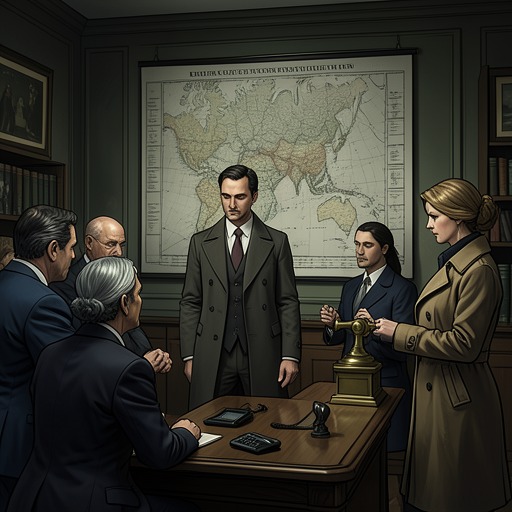
At Roger’s apartment, FBI agents are present in force after his death. Kline, the agent in charge, proves unexpectedly accommodating: once Dylan makes clear he is not trying to take over, Kline gives him gloves and invites his input. The agents have found organized papers on the apartment’s only clean surface, but no suicide note. Kline thinks Roger may have left the material to help them get Jackman, while acknowledging that the search is not finished. Roger’s notes include dates of the explosions and a reference to Jackman receiving the baskets, with two hundred thousand dollars written beside it as a possible payment for explosives. By the time Dylan arrives, Jackman has been picked up and is waiting for his attorney in an interrogation room in Las Vegas. Kline nevertheless warns that Roger’s notes may not be enough to keep Jackman in custody.
The papers also leave a separate question open: who recorded Compton Thomas MacKenna’s farewell address? Kline says the nephews are unlikely to have filmed it because Compton did not trust them and did not want them to know what he was doing. Investigators are looking at the housekeeper after discovering a substantial deposit in her account about six weeks earlier, and they are also interested in Compton’s attorney. These are leads, not settled findings; Kline expects the responsible person to be found, but the recording’s provenance remains unresolved at this stage.
Dylan’s examination of Roger’s papers makes the FBI’s orderly-looking evidence feel less reassuring. Roger appears to have left enough clues to connect Jackman without providing the hard evidence needed to convict him. Dylan also notices Reece Crowell’s name in the notes, the absence of a suicide note, Roger’s access to another gun, and the contrast between the disorder of his life and the neatness of the material. He objects that the evidence has been laid out almost too conveniently and suggests the scene may have been staged. Kline initially allows that events can fall into place, but the suspicion gains support when the laboratory matches fingerprints on a calendar to Ewan MacKenna, who has gone missing. The match prompts Kline to reopen the possibility that the crime scene was arranged rather than simply discovered as it appeared.
Kline then sets out rival explanations instead of treating the first theory as conclusive. In one, someone trusted by Compton records the video and makes an extra copy, sells it to Roger, and Roger brings in Jackman because he believes Kate must be eliminated for him to receive any inheritance. In another, Ewan obtains the video, recruits Jackman, and helps frame Roger, who may not know about the scheme. The new fingerprint result does not settle which account is true; it expands the possibilities. Kline also asks why Roger died when he did. The agency’s inquiry thus proceeds by revising hypotheses against new evidence, while the suspicious neatness of the apparent solution itself becomes a reason for doubt.
Coordination and Protection
The FBI’s role is not confined to reconstructing past crimes. When Dylan tries to move a meeting at the Smith and Wesson building so that Kate will not have to enter a potentially dangerous location, he anticipates the work of coordinating security with Nate, the Charleston Police Department, the FBI, and the Savannah Police Department. The safeguards would take time and would create a logistical burden; the attorney ultimately says the venue cannot be changed. The episode shows the practical cost of protecting Kate across agency and city boundaries, as well as the limits imposed by arrangements that security personnel cannot simply revise.
That danger becomes immediate when Kate is abducted through the back exit. The door alarm has been disarmed, and a security guard has been summoned to the entrance under the false impression that police need him there. After realizing Kate has left by the back door, the guard acknowledges his mistake. A responding officer says the FBI is on its way and relays Kline’s instruction to wait at the scene. Dylan arrives too late to prevent the abduction. Federal involvement is therefore part of the emergency response, but it does not erase the vulnerabilities created by a disabled alarm and a diverted guard.
Kline, Evidence, and the Agency’s Limits
Kline gives the FBI a distinct human face. He is a tall, thin agent about Dylan’s age, with deep creases at the corners of his mouth and a stooped posture associated with years of crime scenes. More important to the investigation, he is willing to let a local detective inspect Roger’s apartment once Dylan makes his intentions clear. Their cooperation contrasts with the earlier reports of agencies protecting their own information, without implying that the wider competition has disappeared.
The investigation continues to test accounts against precise timing. At a later confrontation, Dylan challenges Nate’s claim that Anderson Samuel Smith told him Kate had refused the inheritance. Dylan reasons that Nate could have learned it from Vanessa MacKenna, who left before Kate changed her mind. He supports the alternative by comparing the short interval before his own conversation with Nate to Anderson’s recollection that at least fifteen minutes passed while police confiscated Roger’s gun and Anderson was called back to his office. Anderson’s phone logs provide a record against which those recollections can be checked. Kline is present as Dylan lays out the discrepancy. The scene does not establish an independent FBI discovery of Nate’s information; rather, it places the agent inside an inquiry where chronology and records are used to expose possible collusion.
The FBI also questions Kate after her encounter with the bomber, alongside Kline and Dylan in the captain’s office. The questions reconstruct what she was told and what she did: she had been instructed which wire to cut, removed the bomb’s bottom panel, and put it in a desk drawer. Officers ask how she knew that shooting the flower basket would not stop the explosion and why she removed the panel. Kate explains that she followed the bomber’s directions, while admitting she did not know why the panel had to be taken out. She recounts the telephone conversation repeatedly without losing patience. The questioning gathers her account of a dangerous encounter, but the scene preserves the limits of what she herself understood.
Across these episodes, the FBI is both an investigative force and one participant in a dispersed, sometimes disorderly inquiry. It follows financial and physical leads, examines a suspiciously organized death, searches for connections among Jackman, Roger, and Ewan, responds to Kate’s abduction, and hears her account of the bomb. Yet no single clue immediately closes the case: Roger’s papers may be insufficient, the identity behind Compton’s recording remains uncertain, and the fingerprint match reshapes rather than resolves the competing theories. The bureau’s significance lies in that ongoing work of investigation, where apparent coherence must be challenged and each new piece of evidence can change the story investigators think they are solving.